Greenbelt Guild Continues to Impress
by Amy Martin, Greenbelt Guild coordinator
Why did a couple of dropped Osage oranges bring me joy during a walk on the Woods Trail along Dixon Branch? Because it’s been many years since that old bois d’arc was healthy enough to make fruit.
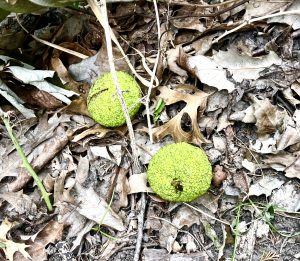
Why did it produce fruit? The efforts of the Greenbelt Guild!
By removing invasive shrubs like privet and bush honeysuckle from the riparian woods, the decades-old hardwoods began receiving enough sunlight and rain to regain their lost health.
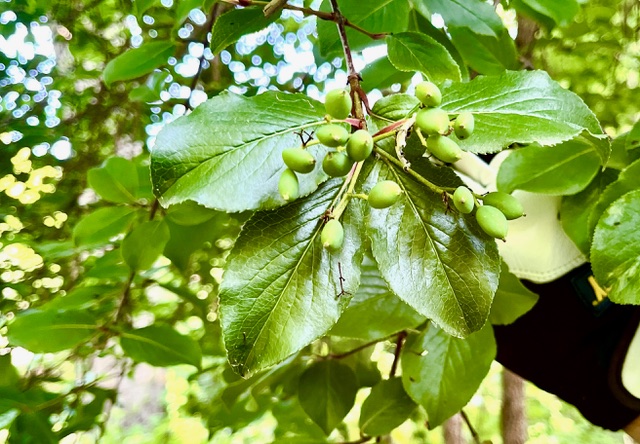
Another success story: We are super fortunate to have an entire grove of rusty blackhaw viburnum, an uncommon native. Its pretty white umbels of tiny blooms turn into black berries in the fall that are relished by birds — but only when they’re happy and healthy.
Francis and I were walking through the grove on a retoration day and noticed baby viburnums just a few inches tall. “Those sprouted this year,” I said. And sure enough, overhead there were green berries! Indicating it had made berries last year as well, just months after we’d cleared around it.
Up the trail a bit, now a privet-free small grove percolates with wood ferns and heartleaf skullcap.
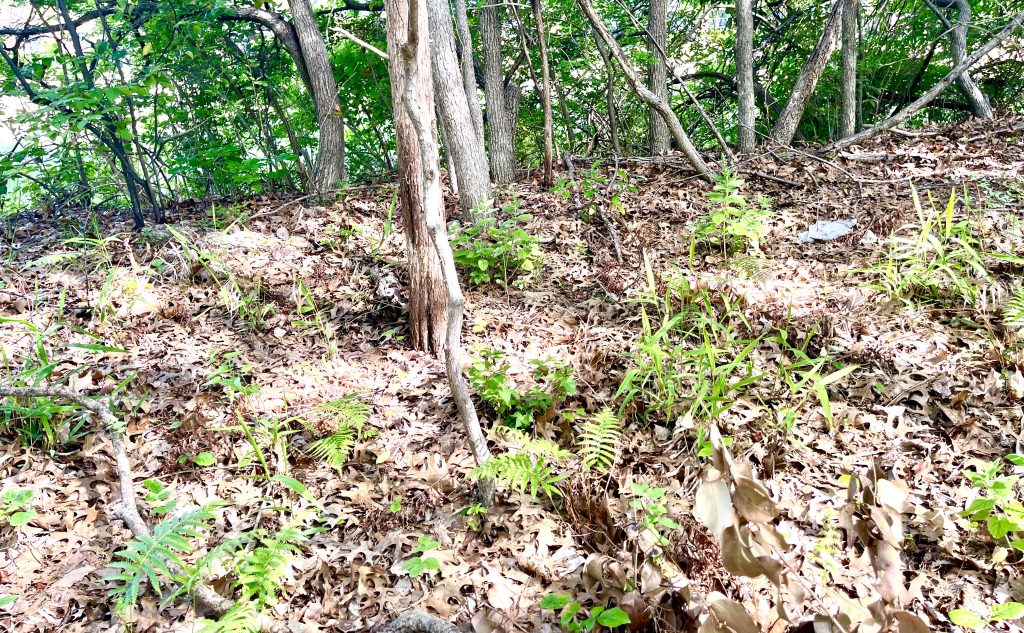
A few yards down, an area cleared of privet now has young oaks and black walnuts about a yard tall.
Armadillos have also returned to the greenbelt! They’ve created divots in the woods in their search for grubs. And to counter a misconception circulating, there are no denning coyotes in the greenbelt; they live in the woods on the other side of Peavy.
Some of the Greenbelt Guild efforts are simply practical. High winds knocked down a couple of small dead trees, blocking the trail, creating an unsafe situation.
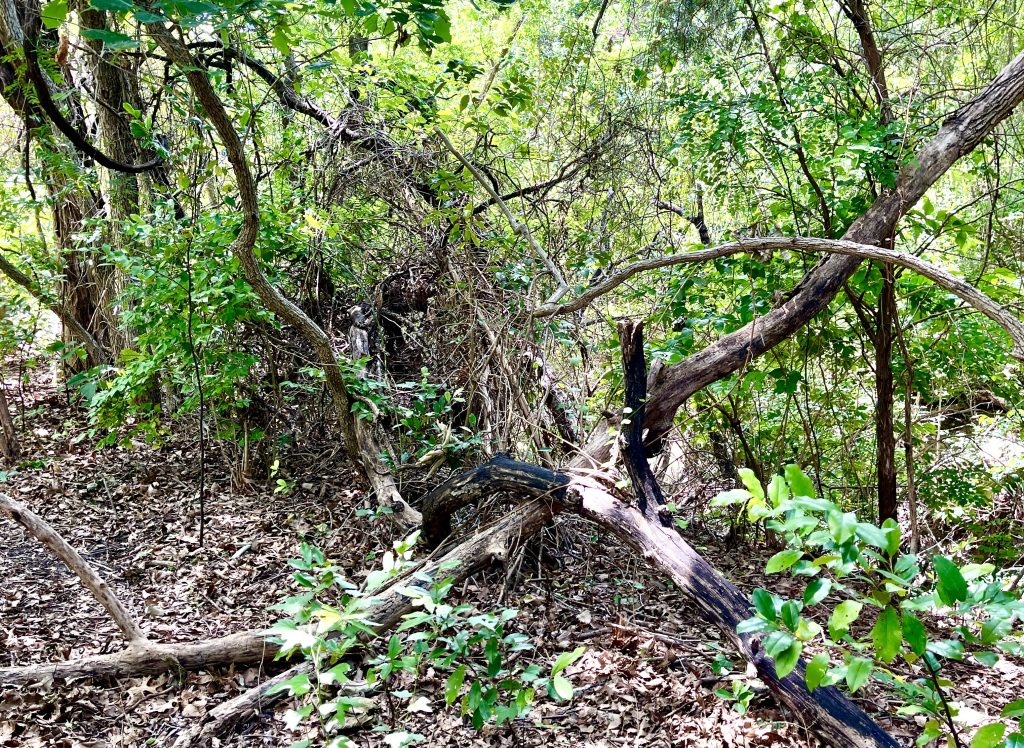
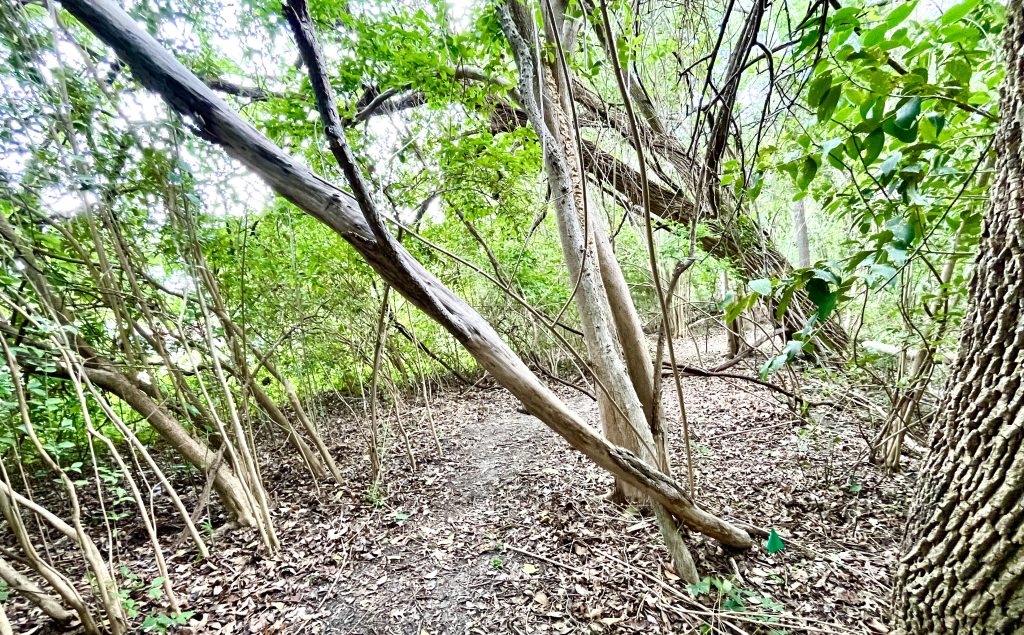
Within an hour of my reporting it to the Guild, Steve, a member from Old Lake Highlands, had it cleared.
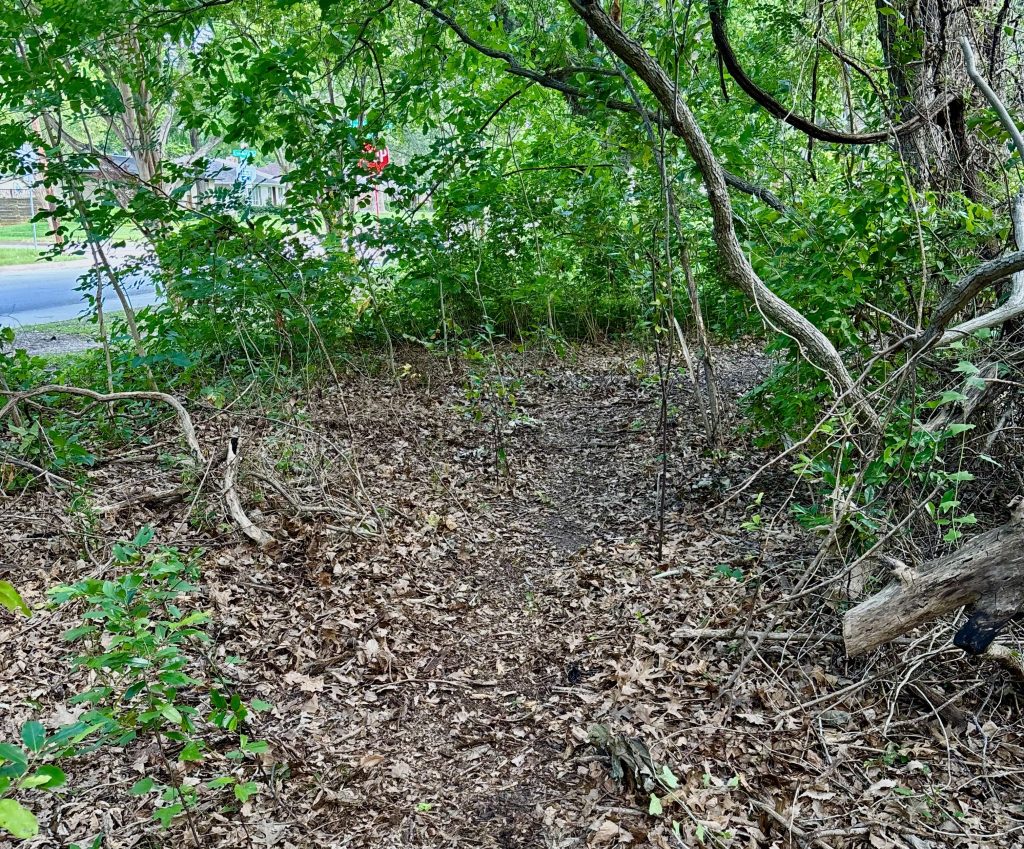
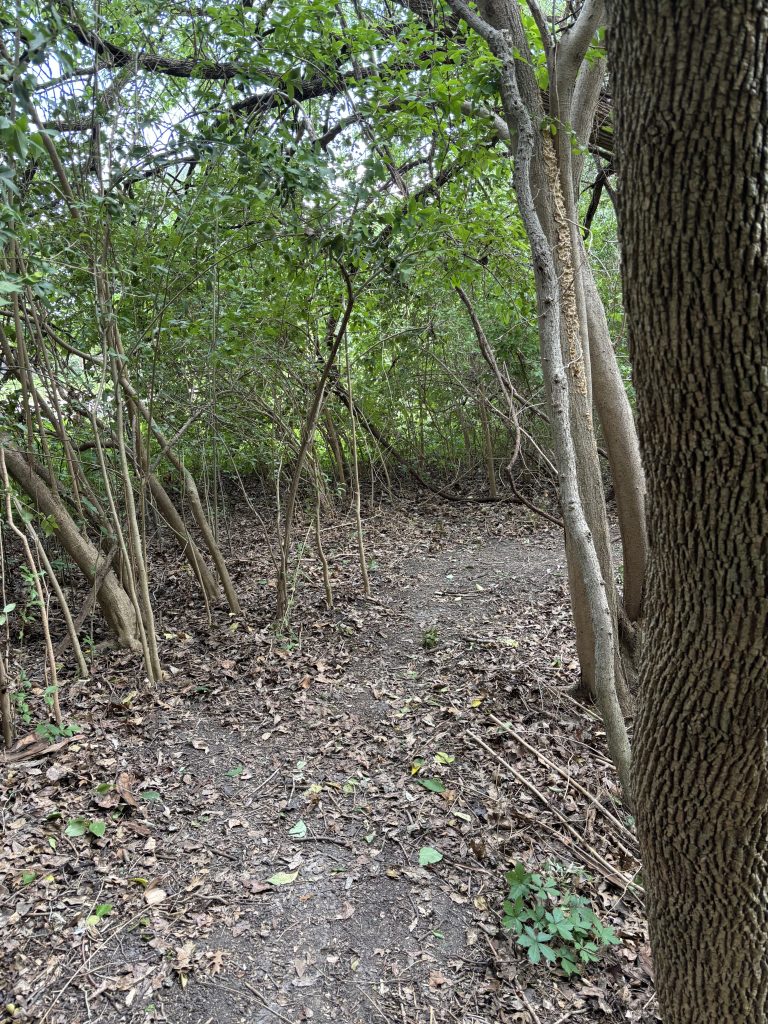
I love these people so much.
I try to do my part. Since I literally wrote the book on poison ivy and know it well, I volunteer to vanquish the plant. After three sweeps, the Woods Trail is mostly free of it for three feet on either side.
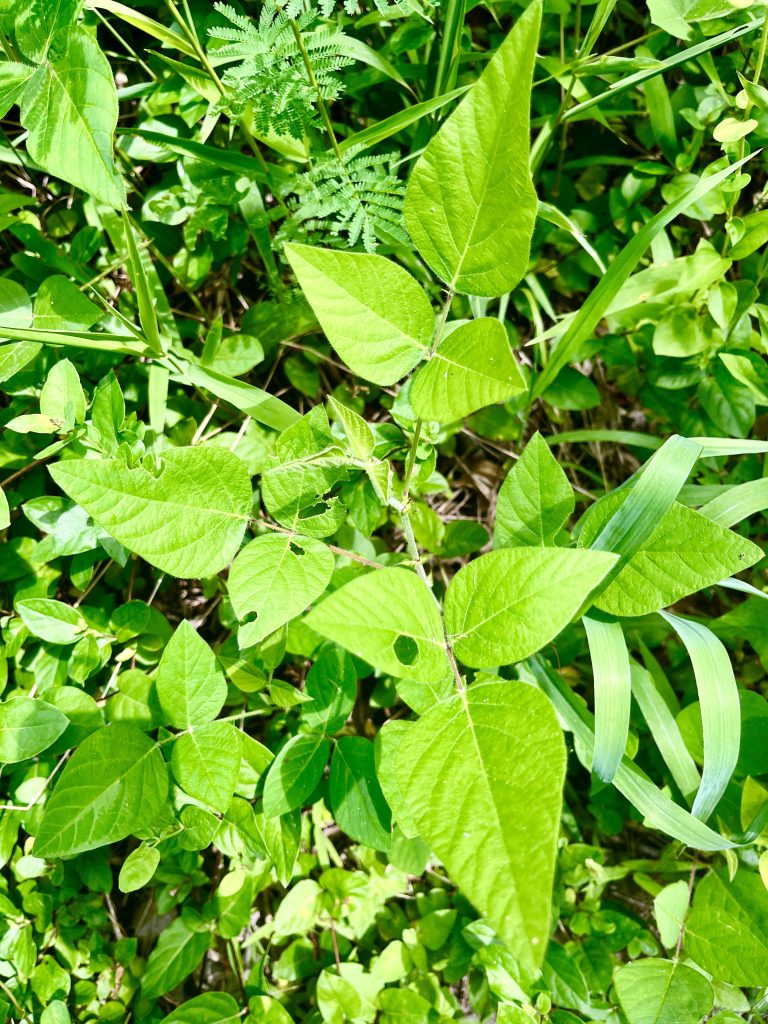
But be aware, this is NOT poison ivy. It is hog peanut. All three leaves are identical. Poison ivy doesn’t do that. Also, the green has a yellow tint.
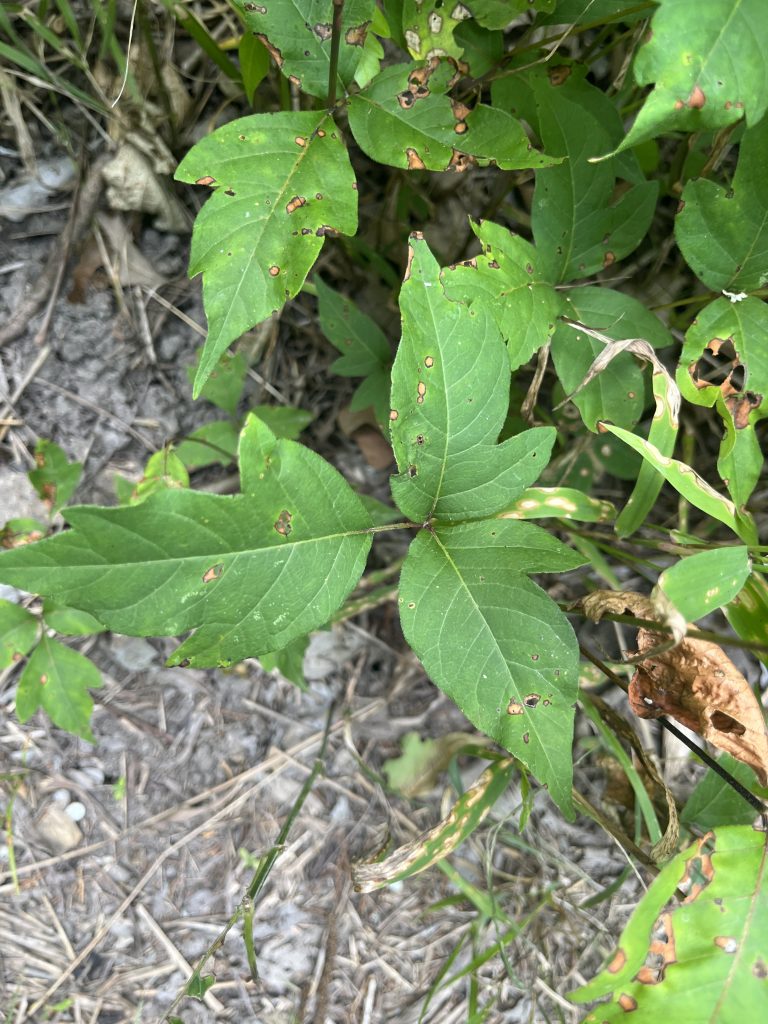
This is poison ivy. Emerald green. Leaves of varying shapes.
The next Greenbelt Guild restoration day on June 7 Sunday from 9 am to noon will probably be our last one before the summer heat break (unless we get a cool spell). Join us! Healing the land is better than therapy. Get on our newsletter list by emailing Amy Martin.
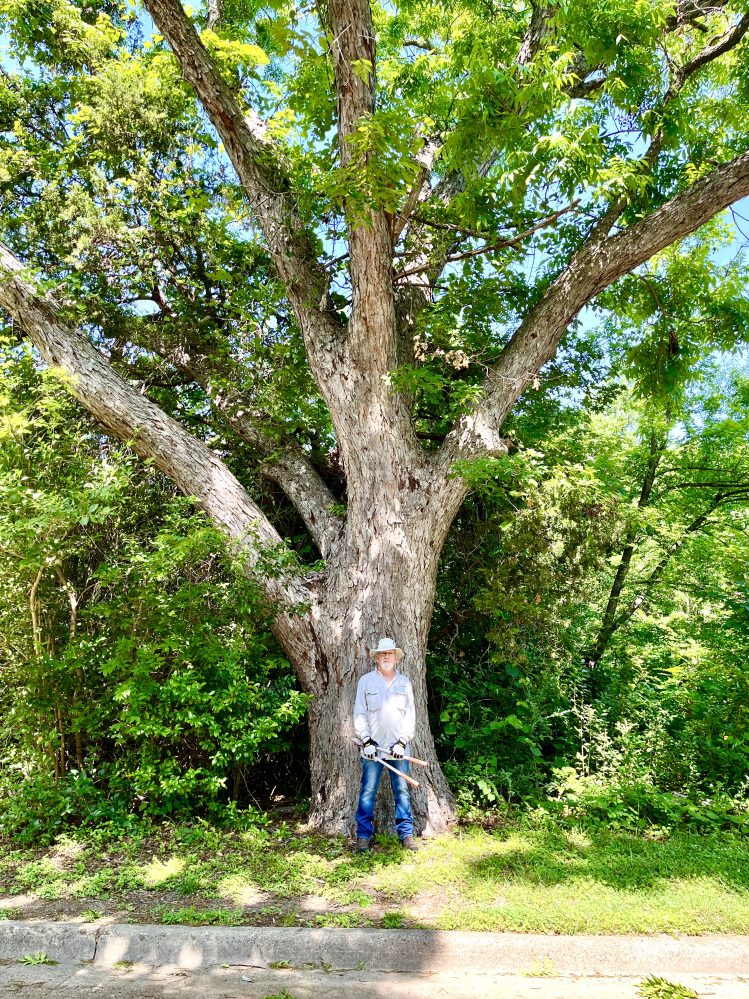
Cover photo: Francis standing in front of the largest and oldest pecan in the Greenbelt near Creekmere Circle. Ensuring it stays healthy by clearing out some of the largest invasive shrubs beneath it will be a fall project.