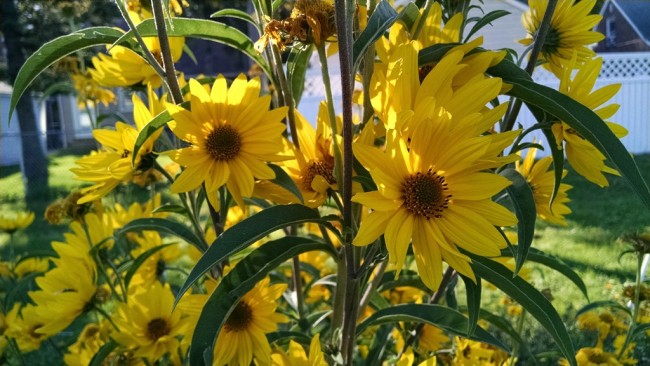
More Color Coming for the Creekmere Meadow
by Amy Martin, Greenbelt & Garden Coordinator
The Creekmere Meadow used to look like this, all the way across. A monoculture. No color, no texture.
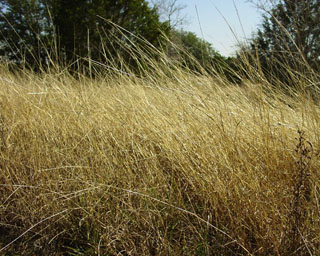
By introducing native plants into the meadow, we are slowly pushing out the KR bluestem grass that took over. It’s a species from China that does not play well with others. Conventional wisdom holds that KR cannot be vanquished. Bah! To turn the meadow into a grassland bird sanctuary, we have to.
Years ago, Michael Parkey and volunteers installed eastern gamagrass plants (across from Overglen), which have done exceptionally well. Seed harvested from Clymer Meadow was scattered about.
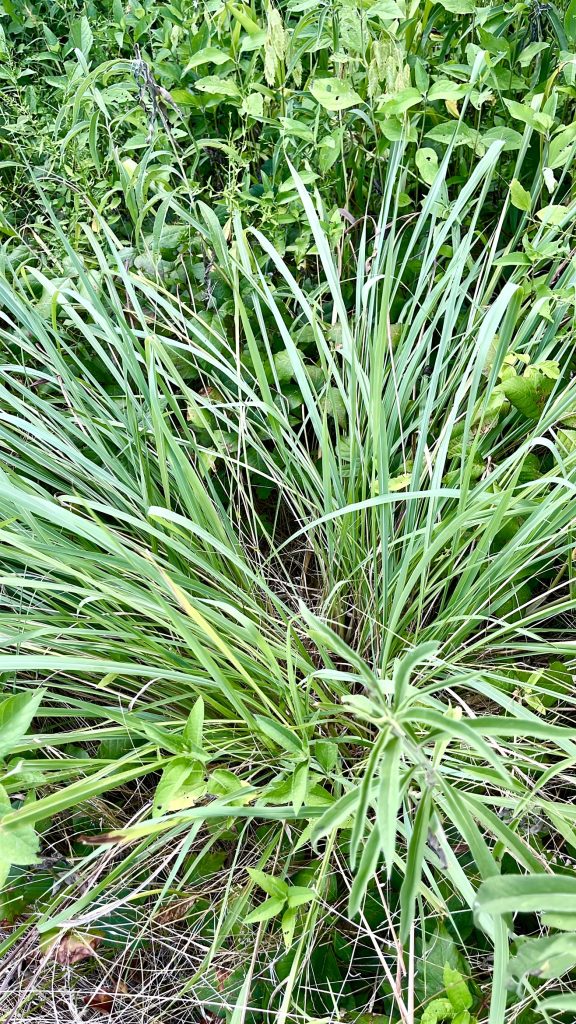
Indiangrass seeds, harvested from the Entry Meadow and sown in the meadow’s eastern end two years ago, are now scattered skinny young blueish plants about five feet tall.
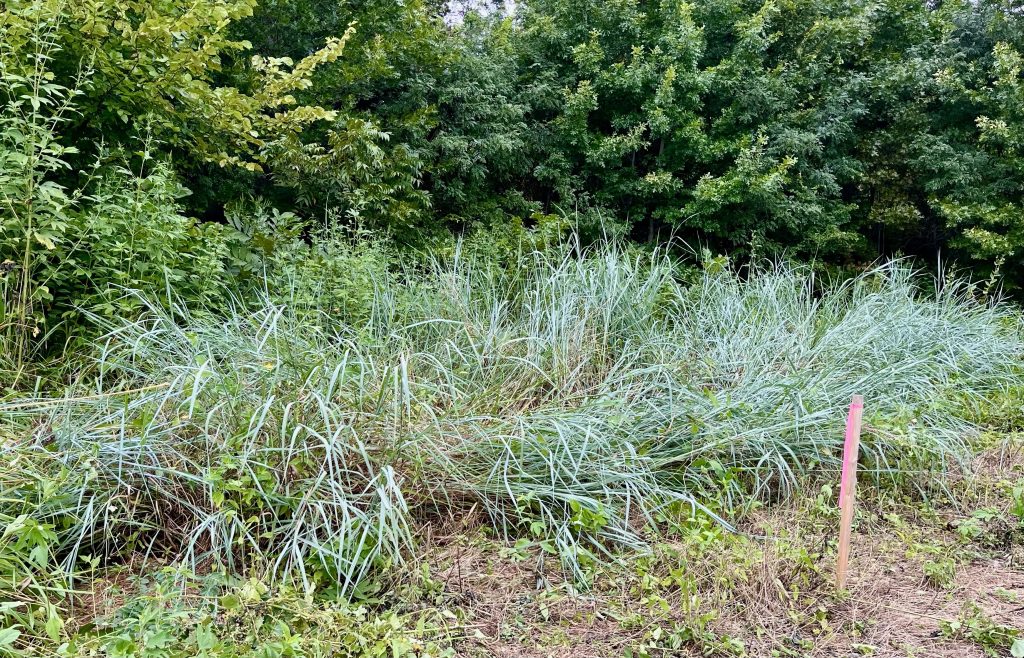
Guild volunteers collected seeds of meadow natives all last year. During this past Full Moon, I strewed them about, in hopes the upcoming rain would be moderate enough not to wash them all into the creek. Figuring that the rains would, to some degree, I seeded high on the slope.
In the eastern end (closest to Sylvania), joining the eastern gamagrass and Indiangrass is a vigorous stand of Maximilian sunflowers, an aggressive late-summer bloomer that grows tall and super strong. It’s been dominating the KR bluestem. I added Canada wildrye, and wildflowers, black-eyed Susan (yellow, spring to fall), cast-iron plant (purple, late summer), mealy blue sage (lavender, spring), and late boneset (white, fall).
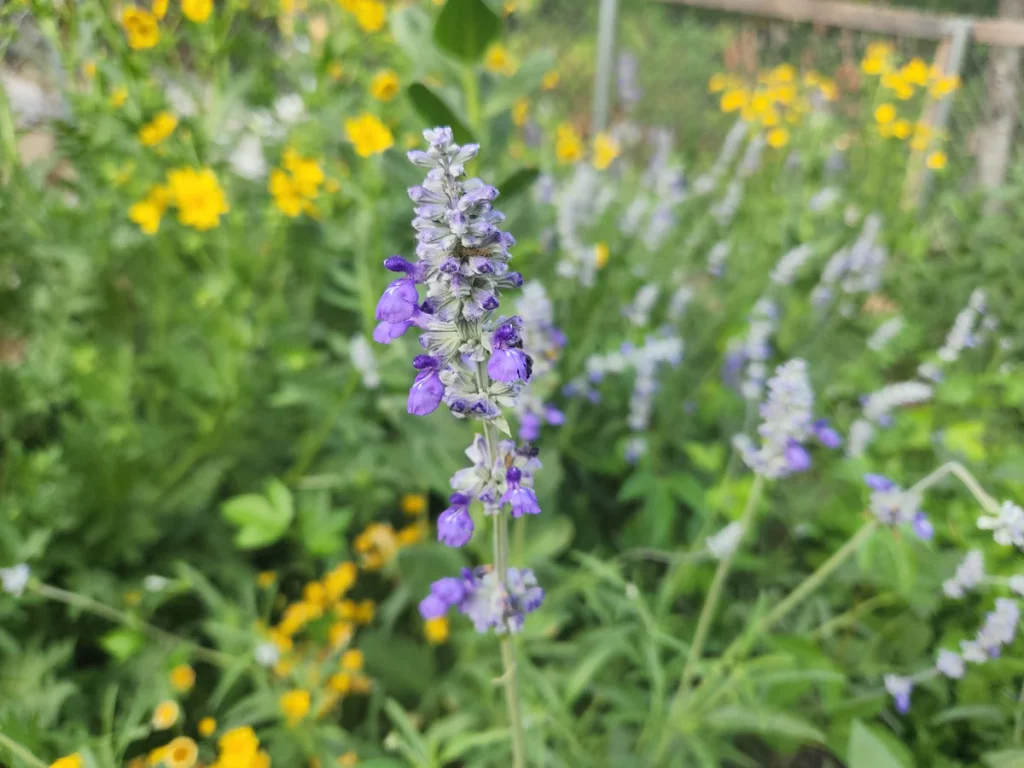
The ever-so-fabulous Pentstemon cobea, a very showy spring bloomer, has huge blooms that produce large seeds in hard pods. I expanded its miracle patch by breaking off seed stems and tossing them about, stepping on them when I could.
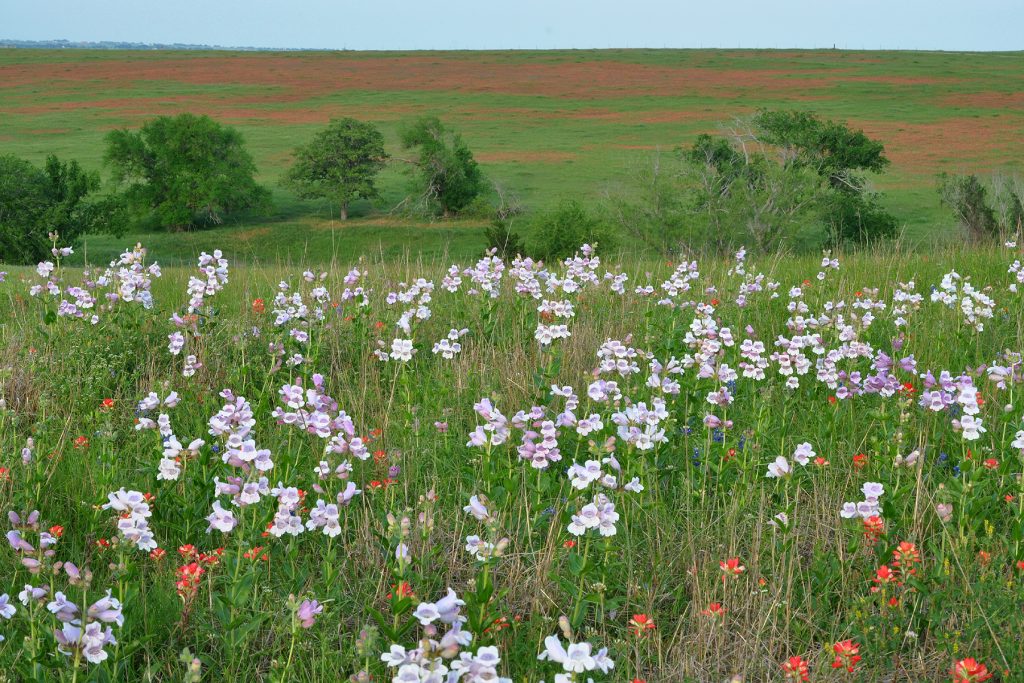
The west end of the Creekmere Meadow has shorter plants and way too much KR bluestem. Some little bluestem we planted from a prairie rescue is hanging in there. This slope has severe erosion issues, and it’s hard to get plants to take hold, even KR bluestem.
Sideoats grama was added, along with some Canada wildrye, plus the wildflowers black-eyed Susan (yellow, spring to fall), diamond flower (tiny white spring to fall, Beatrice, liatris (summer, purple), and mondara (lavender, early summer).
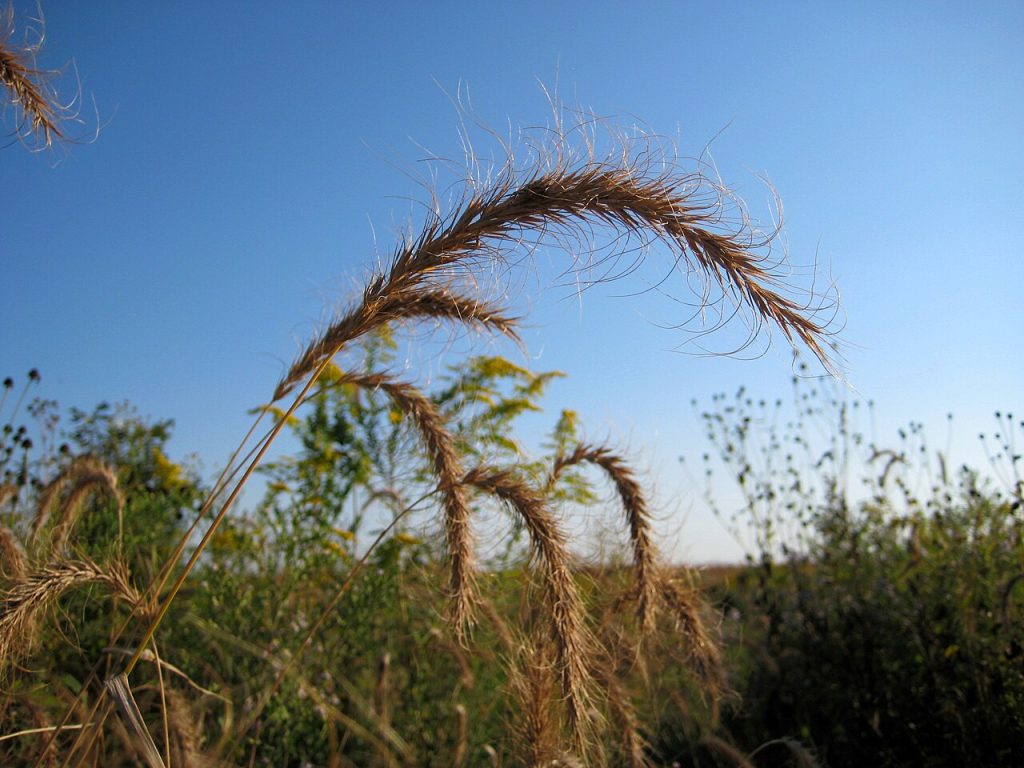
Want more color? Donate to the Greenbelt Guild, so we can rent a mechanical seeder that digs furrows for seeds and presses them in so they don’t float away. We also need a donated riding mower to keep the giant ragweed (achoo!) in check.