Whitehaven Garden: Ready for Spring!
by Amy Martin, Gardens & Greenbelt Coordinator
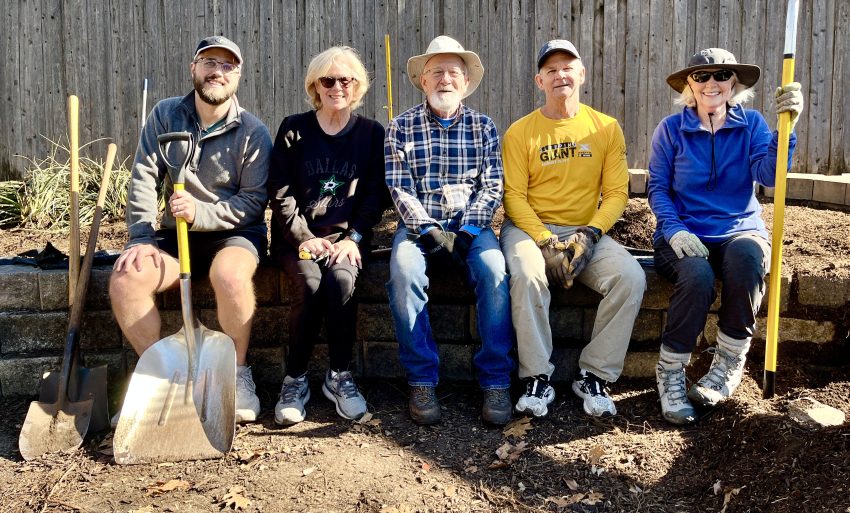
Shown in photo, from left: Charlie of Coleridge, Eileen of Sylvania, Francis Shaner and Keith Marcom of Eastwood Gardeners, and Katherine Trotter of the Greenbelt Guild.
We came, we shovelled, we conquered! You’ve read the story of the Whitehaven Garden: how it came to be, its long decline, and the first steps to bringing it back to life.
We called for All Shovels on Deck and you responded. Which was fabulous, since our usual crew was down to three due to medical issues — you nearly doubled our numbers!
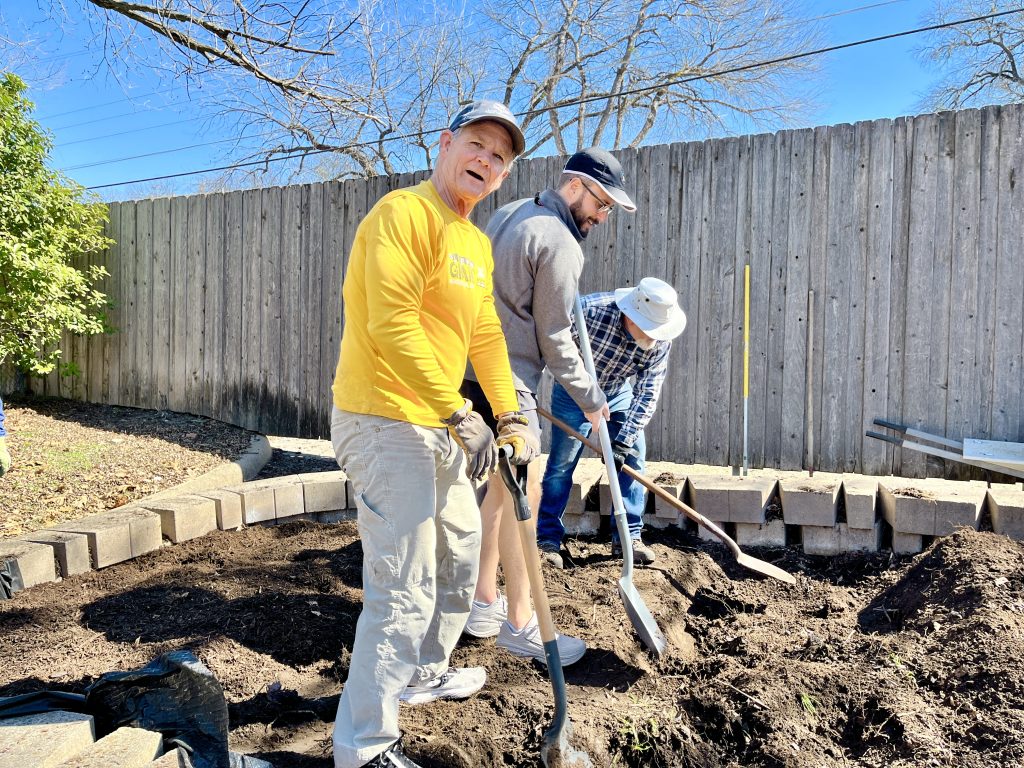
It was a tall order: mix the foot or so of dirt remaining in the bed with six cubic yards of compost, which required spading a 20×6-foot bed multiple times!
But the compost pile we requested turned out to be decaying mulch. (We got it for free; can’t complain much.) Francis realized that to work, it needed to be run through a leaf grinder to pulverize the wood chunks and bark pieces.
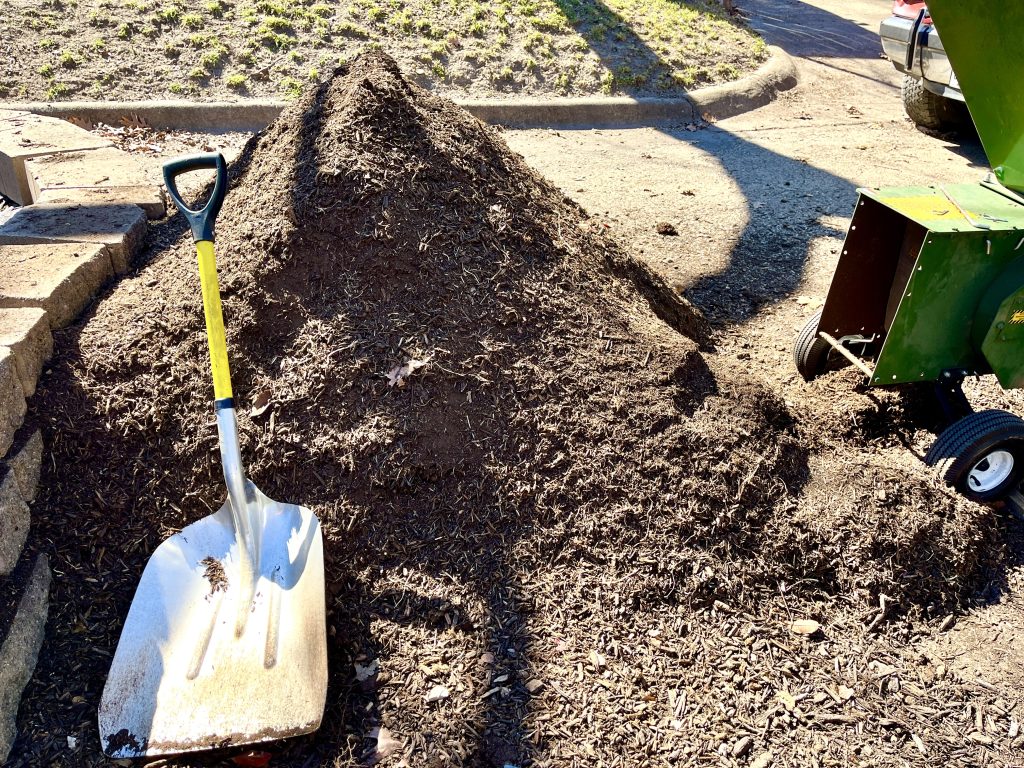
Francis hauled his beast of a grinder to the garden site and began to grind. But first he had to spread out the composted mulch to dry it out. After several days and many hours of work, he whittled the compost pile down by half. We’ve informally deemed the bed the “Francis Shaner Honorary (But Not Dead Yet) Garden.
Ideas Arise
So how to do this, we mused, hands on hips, staring at the shallow bed of hard soil and piles of compost waiting to go in? Grinding the remaining compost would be too time-consuming, fatiguing, and loud.
The brilliant solution was to layer everything. Put the rough compost-mulch at the bottom, where it would decompose over time. Great idea! But first we had to move aside the bottom dirt, which had to go somewhere.
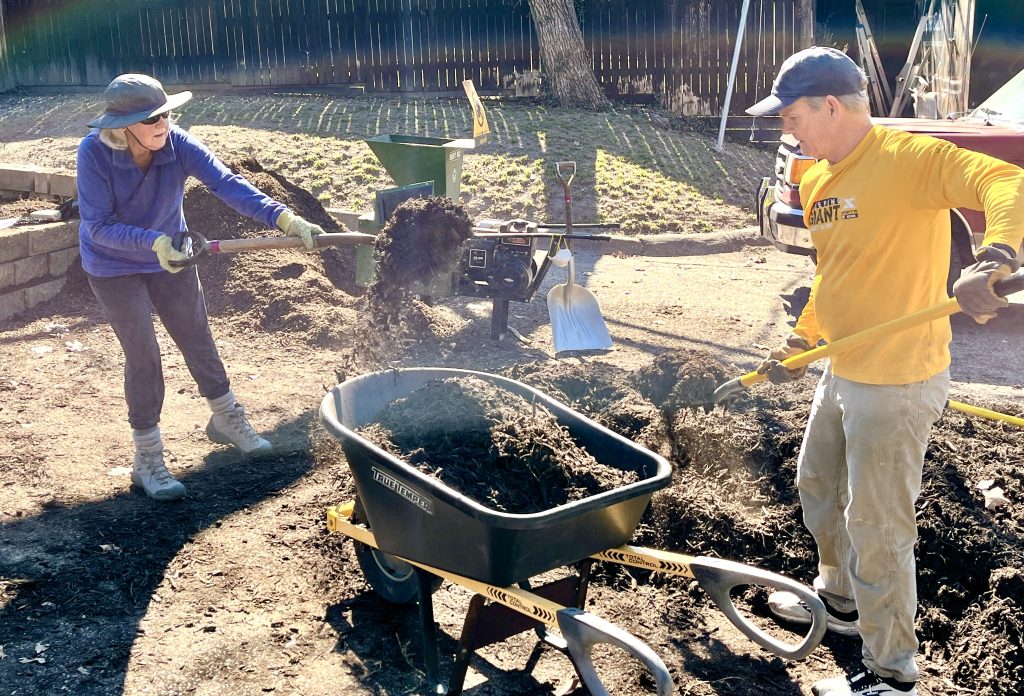
So we did it in strips. A few volunteers moved dirt to the adjacent strip and filled the empty space with rough compost-mulch, which other helpers brought in by buckets and wheelbarrows. But it was too “fluffy,” so we stomped it flat, which was fun
Then the dirt was replaced on top of the compost-mulch. Finely ground compost was wheelbarrowed to the bed and spread atop that. Repeat the process five times! Voila! A garden bed.
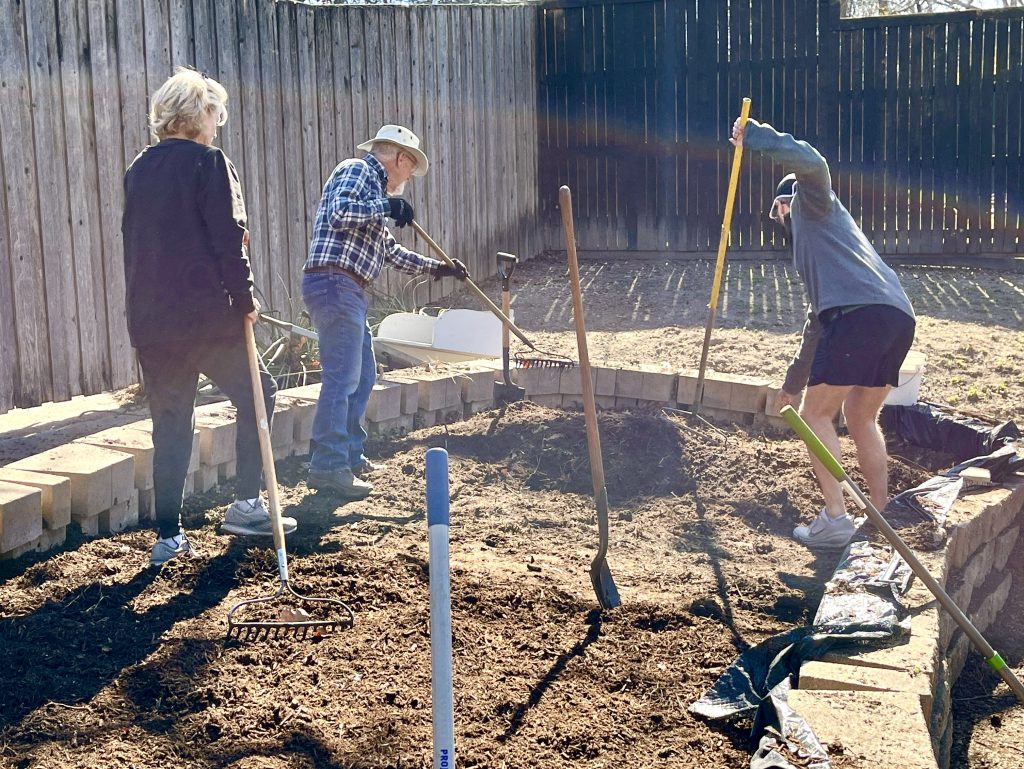
Only so many people with long tools can fit in the bed at a time, so the rest of us found tasks: bagging up trash and debris, sweeping stray compost into the pile, sweet-talking with Arlo (the barky neighbor’s dog), sweeping up stray compost. and managing the red yuccas.
Red Yuccas on the Move
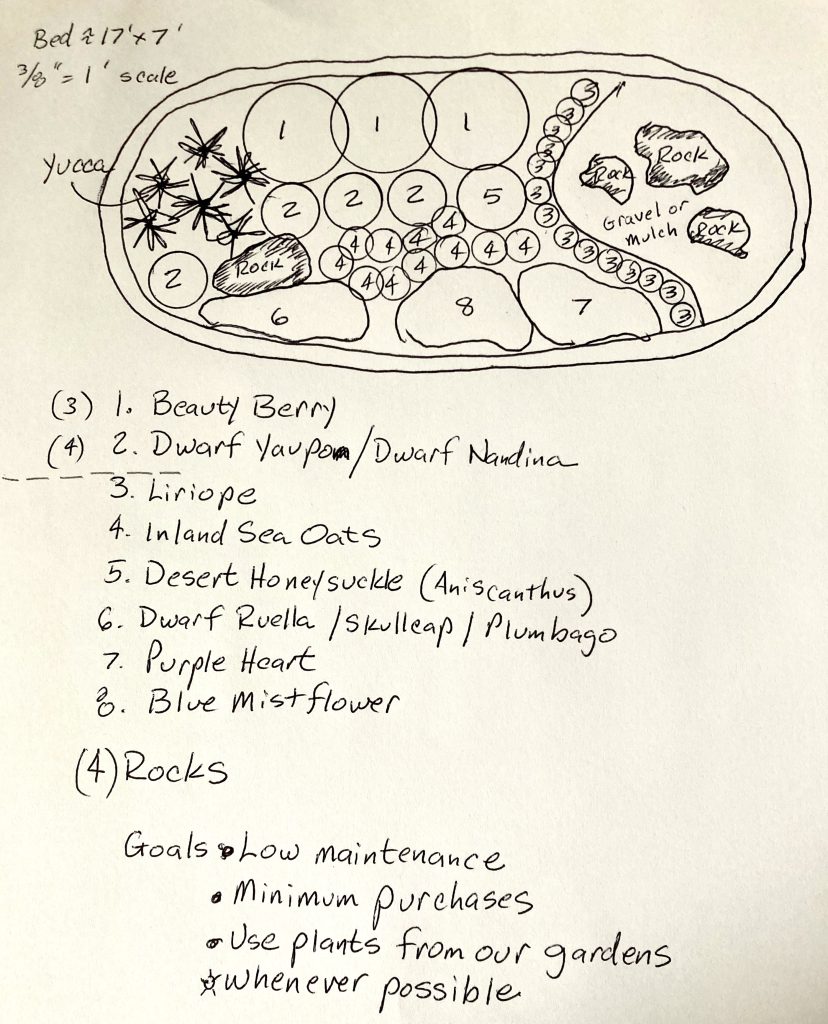
A number of red yuccas were all that remained alive in the bed, so a few weeks ago we pulled them up and stashed them in a temporary spot in the bed.
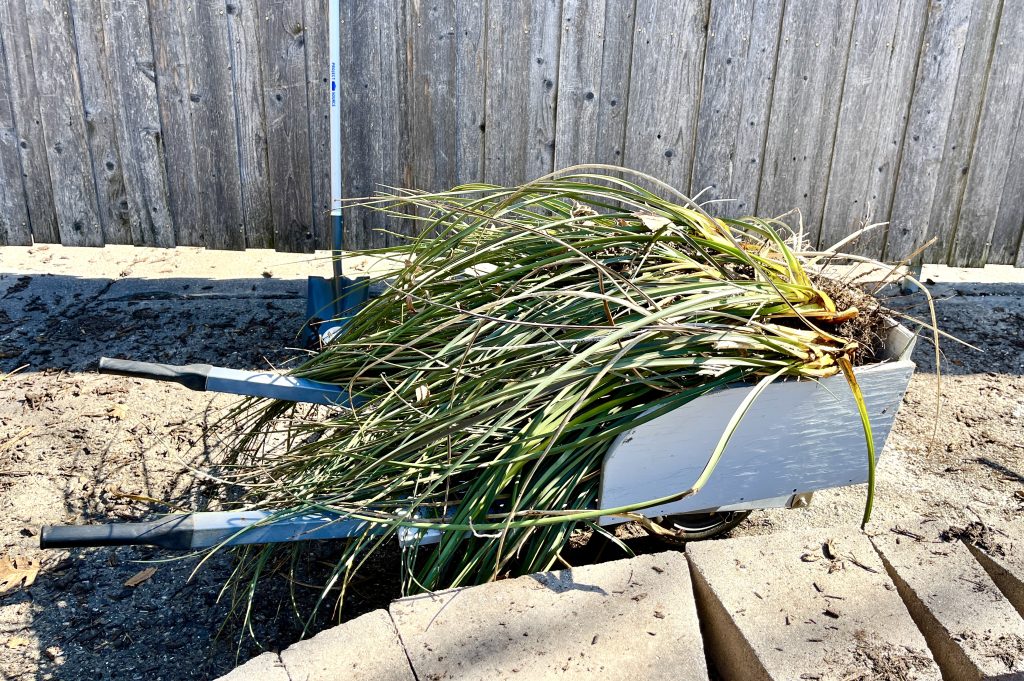
But to do today’s work on the bed, they had to be evicted and put in a wheelbarrow. Once their final spot was completed, we picked out the best looking ones and dug them into the bed.
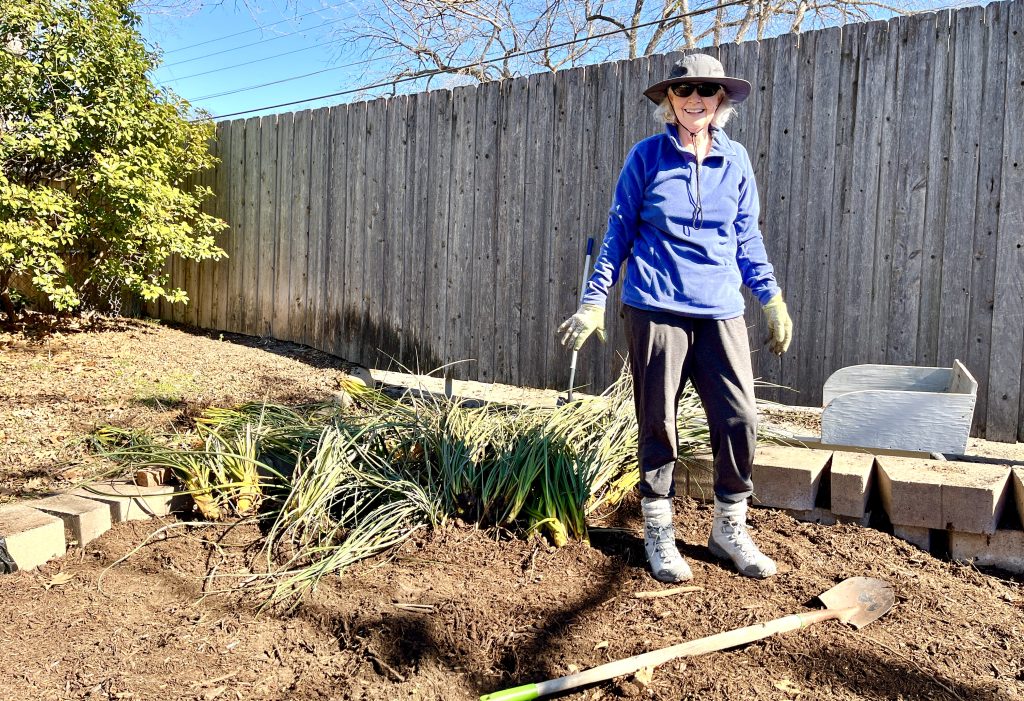
That still leaves about a dozen smaller red yuccas looking for homes. They’re in Amy’s backyard ICU nursery being brought back to life. Look for them at the spring garden sale.
A Spot of Beauty for Eastwood
This is what I love about our garden and greenbelt teams: the way they just know what needs to be done and their effortless teamwork.
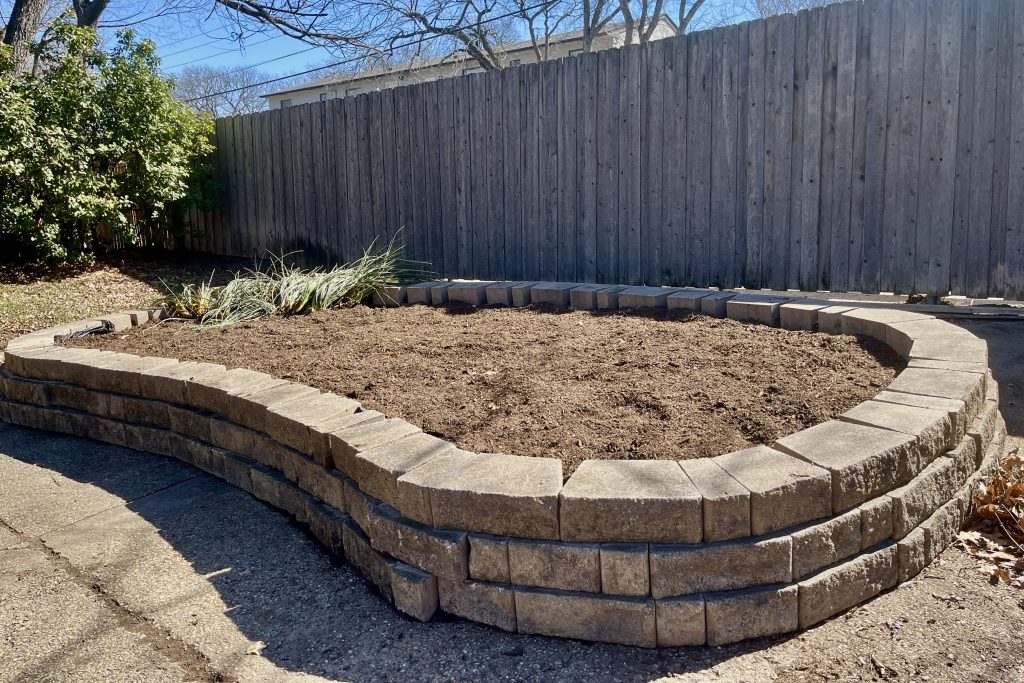
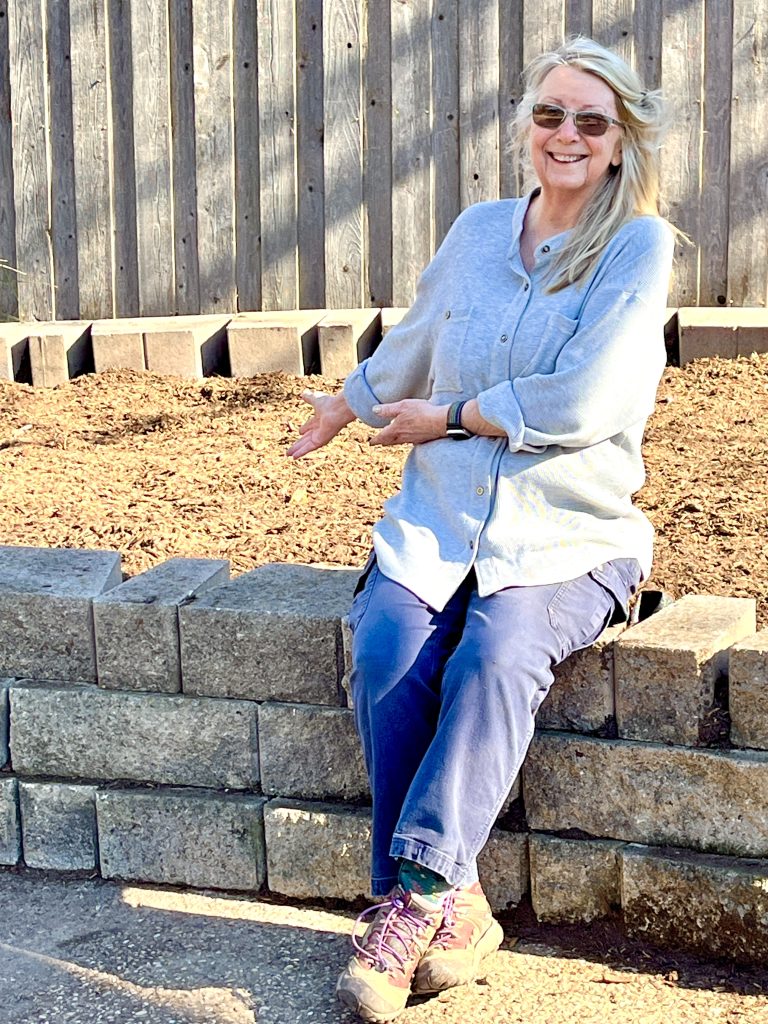
Most people never notice the WhItehaven bed as they drive down Lake Gardens. But it is an Eastwood Neighborhood Association project, and that means it needs to be in good shape and a community asset.
Art for the Bed
The western end of the bed is deeply shaded, too dimly lit for much of anything to grow. But a tall thin piece of sculpture would look grand and could be seen from cars on Lake Gardens.
Currently getting ideas and bids from sculptors to see if they have an art piece that needs a home at a low cost, and from sculpture teachers in case a piece for the bed might make a good class project. We’re also reaching out to an Eastwood woodworker. Those ideas will be presented to the ENA board.
Do you have an outdoor sculpture that you’d like to find a home for? Send us a pic!
What We Still Need
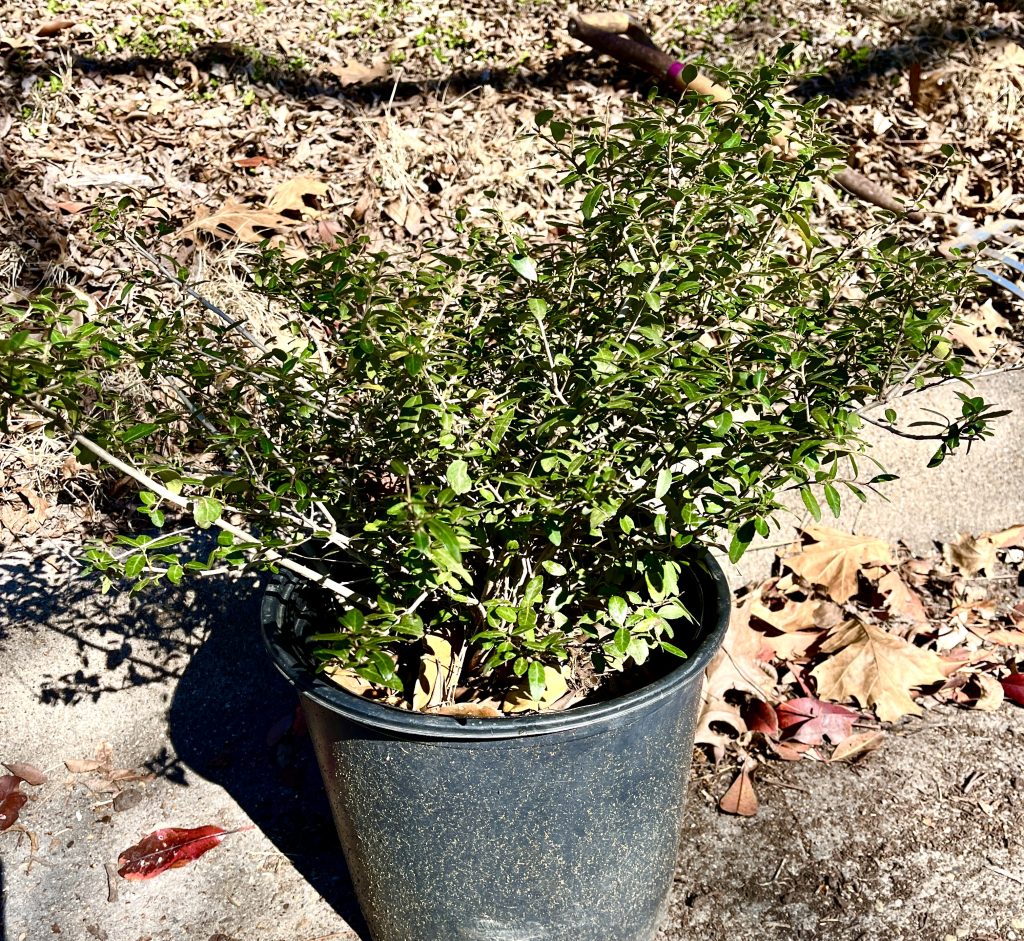
<> Some plants, dug up or purchased, in pots: Shrubs: dwarf yaupon, beautyberry, coralberry. Flowers: Gregg’s mistflower (Conoclinium greggii), dwarf ruella (Ruellia brittoniana, also known as Mexican petunia), flame acanthus (Anisacanthus quadrifidus, also known as desert honeysuckle or hummingbird bush), purple heart (Tradescantia pallida). We already have inland seaoats and mini mondo grass.
<> Large decorative rocks. Please!
<> 50 lb bag of organic fertilizer (not nitrogen dominant).
<> Donations$ for sculpture (stay tuned!).